
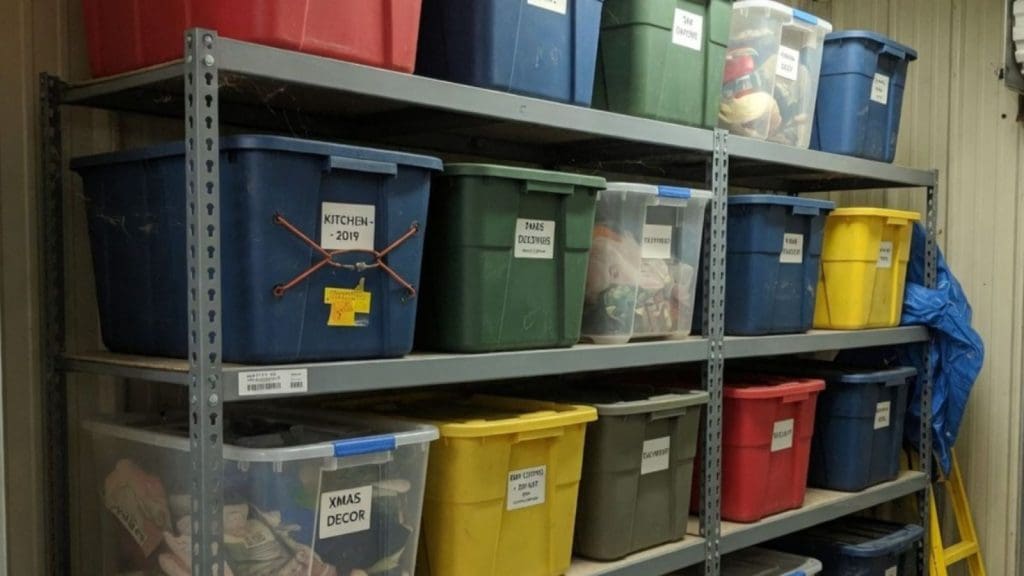
Why Sealed Plastic Totes Can Actually Breed Mold on Leather and Wood in High Humidity
August 11, 2026
Plastic storage totes have become the go-to choice for storing everything from seasonal decorations and clothing to furniture accessories and family keepsakes. They stack neatly, keep out dust and pests, and help protect belongings from accidental water exposure.
Because of that, many people assume that once the lid is snapped into place, their belongings are fully protected.
In reality, a tightly sealed plastic tote can sometimes create the very conditions that allow mold to develop, especially when leather, wood, and other natural materials are stored during periods of high humidity. The surprising part is that the moisture responsible for mold often comes from inside the tote, not from outside of it.
Understanding how this happens can help you better protect valuable belongings before they go into long-term storage.
A Sealed Tote Keeps Moisture In as Well as Out
One of the biggest misconceptions about plastic storage totes is that a sealed lid automatically creates a safe storage environment.
While a sealed container does an excellent job of keeping outside moisture away, it also traps whatever air is already inside the tote when it is packed.
If that air contains excess humidity, it has nowhere to escape.
This commonly happens when belongings are packed:
- During hot, humid weather
- Before they are completely dry after cleaning
- Immediately after being moved from a cool indoor space to a warm garage
- After being stored temporarily in a basement, shed, or attic
Even if everything feels dry to the touch, moisture can still be present in the surrounding air or absorbed into certain materials.
Once the tote is sealed, that humidity becomes trapped inside.
Why High Humidity Makes the Problem Worse
Humidity alone does not always cause mold. The problem develops when moisture remains trapped for an extended period without enough airflow to dry naturally.
Throughout the summer, temperatures inside garages, sheds, attics, and other storage areas often rise during the day and cool again at night. Those repeated temperature changes can cause the humidity inside a sealed tote to condense into tiny droplets before slowly evaporating again.
This cycle may repeat hundreds of times over several months.
Although the amount of moisture created during each cycle is small, it often remains inside the container because fresh air cannot circulate through the sealed tote.
Over time, those consistently damp conditions become much more favorable for mold growth than many people realize.
Why Leather and Wood Are Usually the First Items Affected
Not every item inside a storage tote responds to humidity the same way.
Leather and unfinished wood naturally absorb moisture from the surrounding air. Unlike plastic or metal, they can hold that moisture within the material itself, making them more susceptible to mold when humidity remains trapped inside the container.
Items commonly affected include:
- Leather bags and luggage
- Leather shoes and boots
- Wooden furniture components
- Picture frames
- Musical instruments
- Wooden keepsakes and collectibles
This is why homeowners are often surprised to find mold growing on a leather bag or wooden keepsake while the plastic tote itself appears perfectly clean.
The container did not create the mold directly. Instead, it trapped the humidity that allowed mold to develop on moisture-sensitive materials.
Common Packing Mistakes That Increase Mold Risk
Many cases of mold begin before the tote is ever closed.
Some of the most common packing mistakes include:
| Packing Habit | Better Practice |
|---|---|
| Packing recently cleaned belongings | Allow everything to dry completely before storing. |
| Packing during extremely humid weather | Whenever possible, pack indoors where humidity is lower. |
| Wrapping leather in plastic | Use breathable fabric covers instead. |
| Filling the tote completely full | Leave a small amount of space for air movement. |
| Storing totes for years without opening them | Periodically inspect valuable belongings during long-term storage. |
These simple changes often make a much bigger difference than changing the storage container itself.
The Storage Environment Matters Just as Much
Even when belongings are packed correctly, the surrounding environment still plays an important role.
Garages, outdoor sheds, and unfinished basements often experience wide swings in temperature and humidity throughout the year. Those changing conditions increase the likelihood of condensation forming inside sealed containers.
For belongings that are difficult or impossible to replace, choosing the right storage environment can be just as important as choosing the right container.
Leather furniture, wooden antiques, family heirlooms, photographs, artwork, collectibles, and important documents generally benefit from a more stable storage environment where temperature and humidity fluctuate less over time.
Climate-controlled storage is often recommended for these types of items because it helps reduce the environmental conditions that contribute to trapped moisture and condensation during long-term storage.
How to Protect Belongings During Long-Term Storage
If you’re storing valuable or moisture-sensitive items for several months or longer, a little extra preparation can go a long way.
Before placing items into storage:
- Make sure everything is completely clean and dry.
- Avoid packing immediately after bringing items in from humid outdoor conditions.
- Use breathable protective covers for leather and natural materials whenever appropriate.
- Avoid overfilling storage totes.
- Consider moisture absorbers for added protection when appropriate.
- Store valuable belongings in a stable environment whenever possible.
- Check long-term storage periodically instead of sealing containers for years at a time.
These steps help reduce trapped humidity while giving valuable belongings a better chance of remaining in excellent condition.
If you need boxes, packing materials, or other storage supplies while preparing your belongings, Armor Storage has storage and packing supplies available for purchase at all locations. This makes it easy to pick up additional supplies when moving belongings into your storage unit.
Protect Your Belongings, Not Just the Container
Plastic storage totes remain an excellent way to organize and protect belongings from dust, dirt, and pests. The problem is not the tote itself. The problem occurs when moisture becomes trapped inside and has nowhere to escape.
Understanding how humidity behaves inside a sealed container makes it easier to prevent mold before it starts.
For valuable leather goods, wooden furniture, antiques, family heirlooms, collectibles, and other moisture-sensitive belongings, combining proper packing techniques with a stable storage environment can provide added protection throughout long-term storage.
Frequently Asked Questions
Should I leave a plastic storage tote slightly open?
Generally, no. Leaving a tote partially open may allow dust, pests, and additional humidity to enter. A better approach is to pack completely dry belongings and store them in an environment with stable temperature and humidity.
Are vacuum-sealed bags better than plastic totes?
Vacuum bags work well for many fabrics and clothing, but they are not recommended for every material. Leather, natural fibers, and certain delicate items can benefit from breathable storage methods instead.
Can mold spread from one item to another inside a tote?
Yes. If mold begins growing on one moisture-sensitive item, spores can spread to nearby belongings, particularly when humidity remains trapped inside the sealed container.
How often should long-term storage be checked?
If practical, inspect valuable belongings every few months. Periodic inspections make it easier to identify moisture or mold before significant damage develops.
When is climate-controlled storage worth considering?
Climate-controlled storage is often a good option for leather furniture, wooden heirlooms, collectibles, artwork, photographs, electronics, musical instruments, and other belongings that can be damaged by long-term exposure to changing temperature and humidity.
Armor Storage | Self-Storage Facilities
Armor Storage offers clean, secure, and conveniently located self-storage units across Kansas, Iowa, and Nebraska. Whether you’re moving, decluttering, or need extra space for your business, our facilities provide a variety of unit options and sizes, parking for RV, boats, and vehicles, flexible month-to-month rentals, and modern amenities like 24/7 security cameras and computerized gate access. With friendly on-site managers and customer-focused service, we make storage simple and stress-free.
We proudly serve multiple communities with locations in Omaha, Gretna, Bellevue, Ralston, Blair, Council Bluffs, Topeka, and beyond. Visit our Locations Page to find your nearest Armor Storage facility.
Contact your local Armor Storage today for current availability, rates, and promotions.