How Contractors Can Slash Overhead Costs with Secure Storage Units Instead of Warehouses
August 11, 2026
As contractors grow, so do their storage needs. Equipment, materials, and inventory can quickly take over office space, shops, trailers, and job sites. While leasing a warehouse may seem like the next logical step, many businesses discover that the true cost of maintaining one extends well beyond the monthly rent.
One question we hear frequently is whether every growing contractor actually needs warehouse space. In many cases, the answer is no. Self-storage units can provide a practical, flexible alternative by giving contractors the space they need without the long-term overhead and commitments that come with commercial warehouse space.
Warehouse Expenses Extend Beyond the Monthly Lease
Many contractors begin by comparing warehouse rent to the monthly cost of a storage unit. However, that comparison often changes after looking at the total cost of operating a warehouse.
Beyond rent, warehouse space comes with ongoing expenses that continue whether the building is full or half empty. Utilities, insurance, maintenance, and security all add to the monthly overhead, even during slower seasons when storage needs are reduced. Those fixed warehousing costs can quickly eat into profits and reduce flexibility as workloads change throughout the year.
| Warehouse Expense | Why It Affects Overhead |
|---|---|
| Utilities | Continue regardless of storage usage |
| Insurance | Applies to the building year-round |
| Property maintenance | Includes routine upkeep and repairs |
| Security systems | Ongoing monitoring and maintenance costs |
| Exterior maintenance | Landscaping, snow removal, or site upkeep |
| Lease commitments | Payments continue even during slower periods |
For contractors with changing workloads, paying only for the storage space they currently need often provides far greater flexibility than maintaining an oversized warehouse.
Flexible Storage Adapts to Your Workload
Construction projects rarely follow identical schedules. Material deliveries often arrive before installation begins, while weather delays or scheduling changes can require equipment and supplies to remain in storage longer than originally planned.
Instead of committing to warehouse space without knowing if you will make use of all of the square footage to make the investment worth it, many contractors benefit from storage that grows or shrinks with their workload. Month-to-month rentals make it easier to adjust as projects begin, wrap up, or experience unexpected delays.
Self-storage can be especially valuable when:
- Remodeling materials arrive before installation.
- Seasonal landscaping equipment needs an off-season home.
- Specialized equipment rotates between multiple job sites.
- Extra inventory is ordered in advance of large commercial projects.
- Offices, shops, or trailers begin running out of usable workspace.
Choosing flexible storage allows contractors to pay for the space they need today rather than carrying the cost of unused warehouse space throughout the year.
Better Organization Improves Productivity
Reducing overhead isn’t only about lowering monthly expenses. It’s also about helping crews work more efficiently.
When tools, materials, and inventory are scattered across offices, trailers, and job sites, valuable time is often spent searching for equipment or replacing items that can’t be located. A dedicated storage unit creates a centralized place for equipment that isn’t needed every day, making inventory easier to manage and helping reduce unnecessary purchases.
Businesses commonly use storage units for:
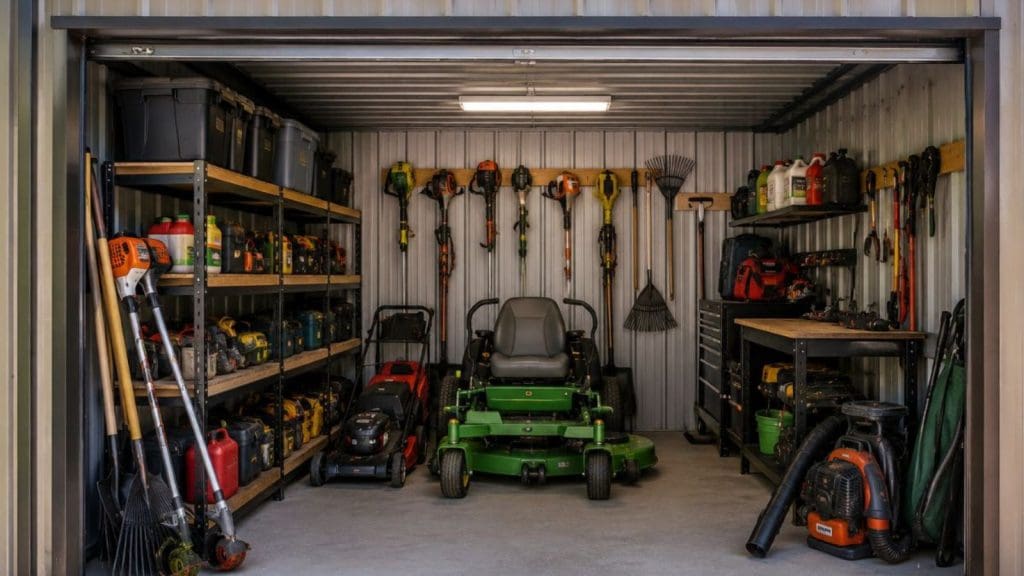
- Power tools and specialty equipment
- Extra plumbing and electrical supplies
- Flooring, tile, and cabinetry
- Seasonal landscaping equipment
- Safety equipment and temporary fencing
- Materials waiting for installation
- Archived paper files that take up valuable office space
- Special event supplies
Keeping these items in a dedicated storage unit helps reduce clutter, improve organization, and make equipment easier to locate when the next project begins. Features like drive-up access can also simplify loading and unloading, helping crews spend less time moving equipment and more time on the job.
Choosing the Right Storage Unit
Not every contractor has the same storage requirements, which is why selecting the right storage unit is just as important as choosing the right amount of space.
Start by considering what you’ll be storing. Contractors with large tools or heavy materials often benefit from drive-up storage units that make loading and unloading faster and less labor intensive. Businesses storing temperature-sensitive products, electronics, adhesives, paints, or certain finishes may want the added protection of a climate-controlled unit.
You should also think about how frequently you’ll need access. Choosing a conveniently located storage facility can reduce travel time between your office, job sites, and stored equipment. Security features such as computerized gate access, security cameras, and insurance policies also provide added peace of mind when storing valuable business assets.
Selecting the right combination of unit size, accessibility, and security helps ensure your storage solution supports your business both now and as it continues to grow.
When Self-Storage Makes More Sense Than a Warehouse
Warehouse space certainly has its place, but it isn’t the right solution for every contractor.
For businesses that need additional space without the long-term expense of leasing and maintaining a commercial building, self-storage at an Armor Storage location near you can provide a practical alternative. It allows contractors to stay organized, protect valuable equipment, and keep overhead costs under control while maintaining the flexibility to adapt as projects and workloads change.
For many growing contractors, a secure storage unit becomes an extension of the business rather than an additional financial burden.
Frequently Asked Questions
Can storage units replace a warehouse?
It depends on your storage requirements, but typically the answer is “yes.” Contractors managing rotating inventory, equipment between projects, or seasonal workloads often find that storage units provide a flexible alternative without the ongoing overhead of a warehouse.
What do contractors typically store?
Storage needs vary by trade. Contractors commonly store surplus inventory, specialty tools, seasonal equipment, project materials, cabinetry, flooring, plumbing supplies, electrical inventory, and other items that aren’t needed every day.
Are storage units suitable for temporary projects?
Yes. Many contractors use storage units to hold equipment or materials while waiting for installation dates, project completion, or the next phase of construction. This helps free up valuable space at offices, shops, and active job sites.
Is climate-controlled storage necessary for contractors?
That depends on what you’re storing. Temperature-sensitive materials, electronics, adhesives, paints, and certain finishes may benefit from climate-controlled storage, while many tools, equipment, and durable construction supplies are well suited for standard drive-up units.
How do storage units help reduce overhead for contractors?
Storage units allow contractors to rent space based on their current storage needs instead of paying for warehouse space year-round. This can help reduce operating costs while providing secure, convenient storage for equipment and project materials.
Armor Storage | Self-Storage Facilities
Armor Storage offers clean, secure, and conveniently located self-storage units across Kansas, Iowa, and Nebraska. Whether you’re moving, decluttering, or need extra space for your business, our facilities provide a variety of unit options and sizes, parking for RV, boats, and vehicles, flexible month-to-month rentals, and modern amenities like 24/7 security cameras and computerized gate access. With friendly on-site managers and customer-focused service, we make storage simple and stress-free.
We proudly serve multiple communities with locations in Omaha, Gretna, Bellevue, Ralston, Blair, Council Bluffs, Topeka, and beyond. Visit our Locations Page to find your nearest Armor Storage facility.
Contact your local Armor Storage today for current availability, rates, and promotions.